


April 2011 Super Outbreak
The April 2011 Super Outbreak was a record-breaking and destructive tornado outbreak across the South, Midwest, and Eastern United States. It was one of the largest and most destructive tornado outbreaks in recorded history.
During the four-day stretch from April 25 to April 28, 2011, 368 tornadoes touched down, bringing widespread damage. The Southeast U.S. experienced the worst of the outbreak, where over 200 of the tornadoes occurred. April 27 was the most significant and active day, as dozens of tornadoes, including 11 EF-4 and 4 EF-5 tornadoes, trekked across Alabama, Mississippi, and Tennessee.
Ahead of the severe weather potential, the Storm Prediction Center (SPC) was monitoring the risk for severe weather, issuing a moderate risk for April 25, and high risks for April 26 and April 27. On April 27, a fast eastward-moving cold front interacted with warm, moist air from the southern U.S., influenced by an intense upper-level trough swinging in from the west. Violent winds that varied throughout the height of the atmosphere created the presence of strong vertical wind shear, an almost-necessary ingredient needed for severe thunderstorms to develop.
The outbreak left behind a huge impact that is still felt across the southern U.S. many years later. It remains one of the worst tornado outbreaks in U.S. history, along with the 1974 Super Outbreak and the 1965 Palm Sunday Outbreak. In total, 348 fatalities and 10.2 billion dollars in damage were attributed to the outbreak.
For more information on the April 2011 tornado outbreak, and on current severe weather conditions in the United States, visit the SPC.
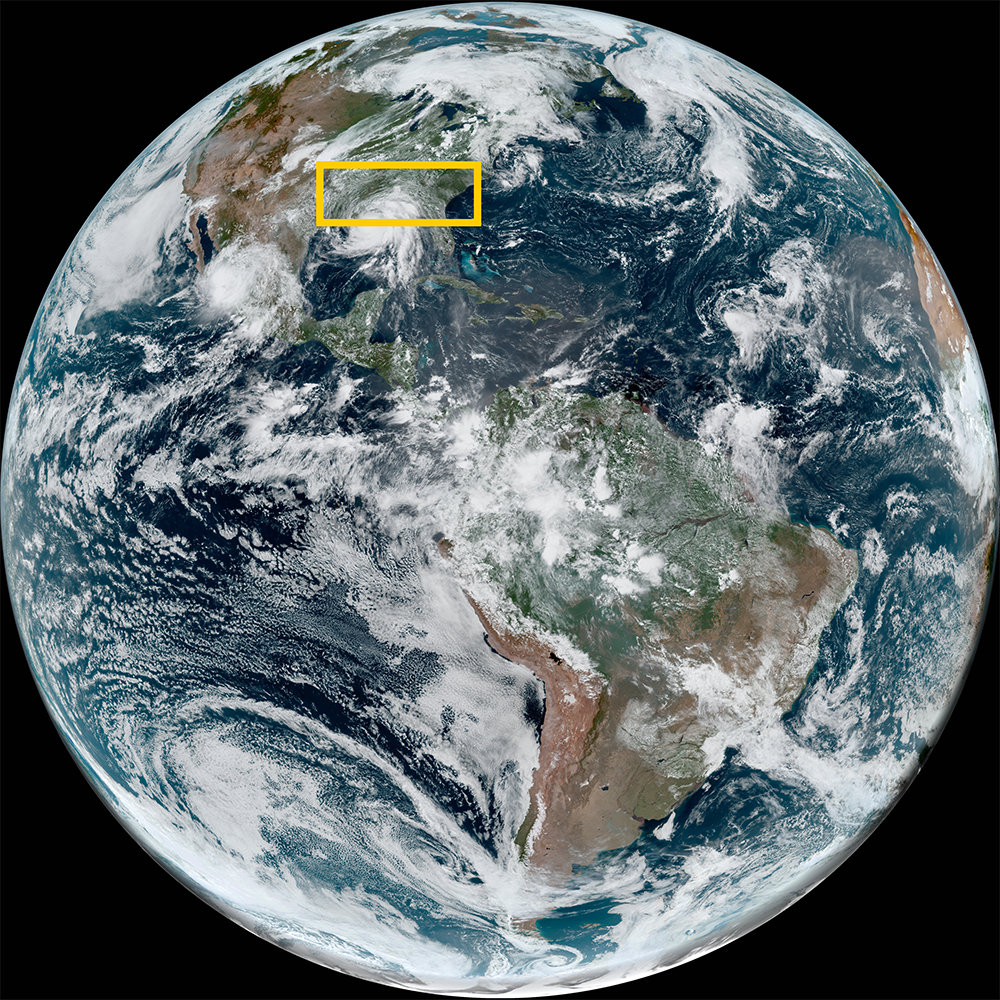
Satellite imagery of this event:
Hover over the boxes to play. Click the images to view enlarged