


Iceberg A23a
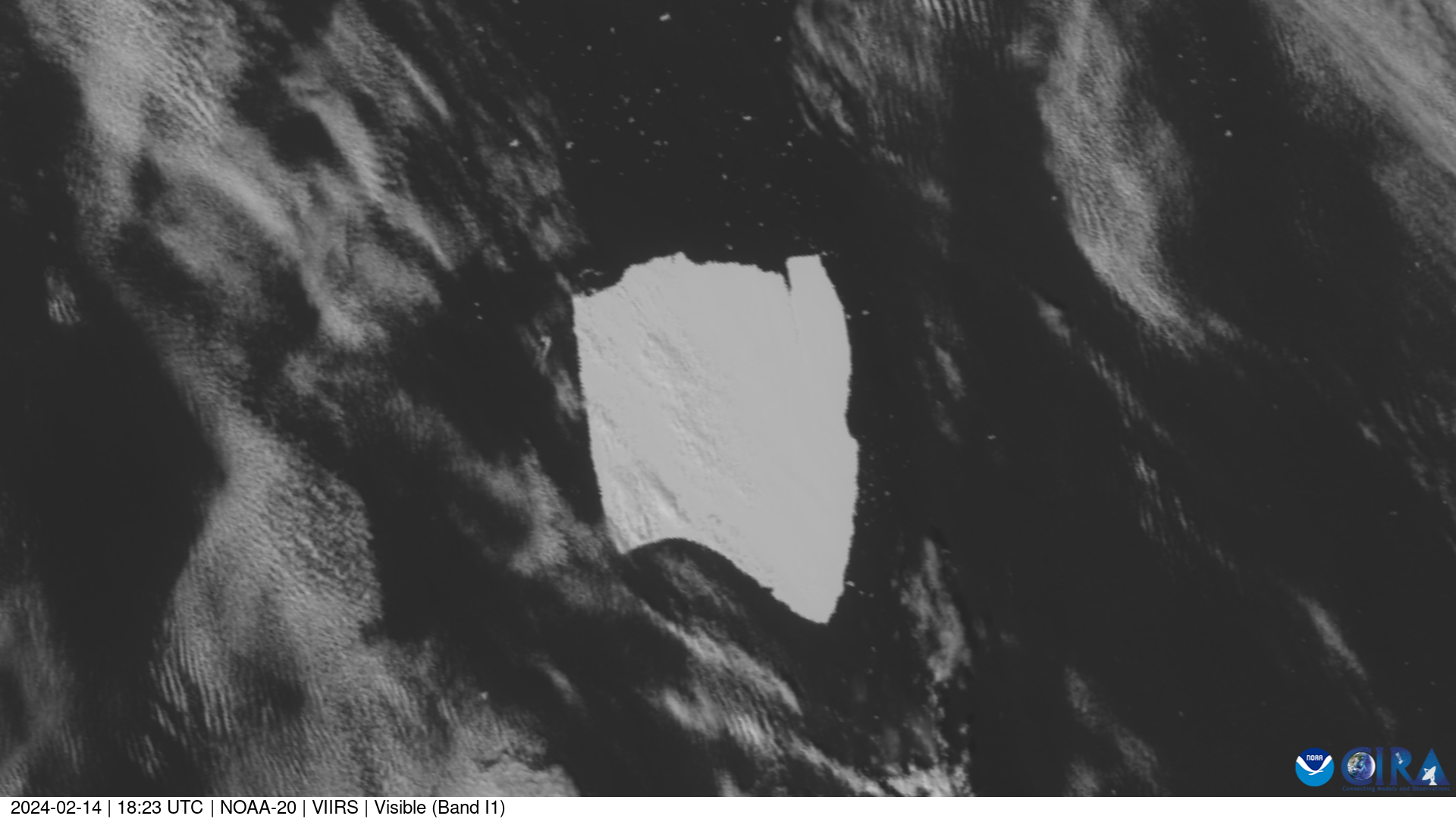
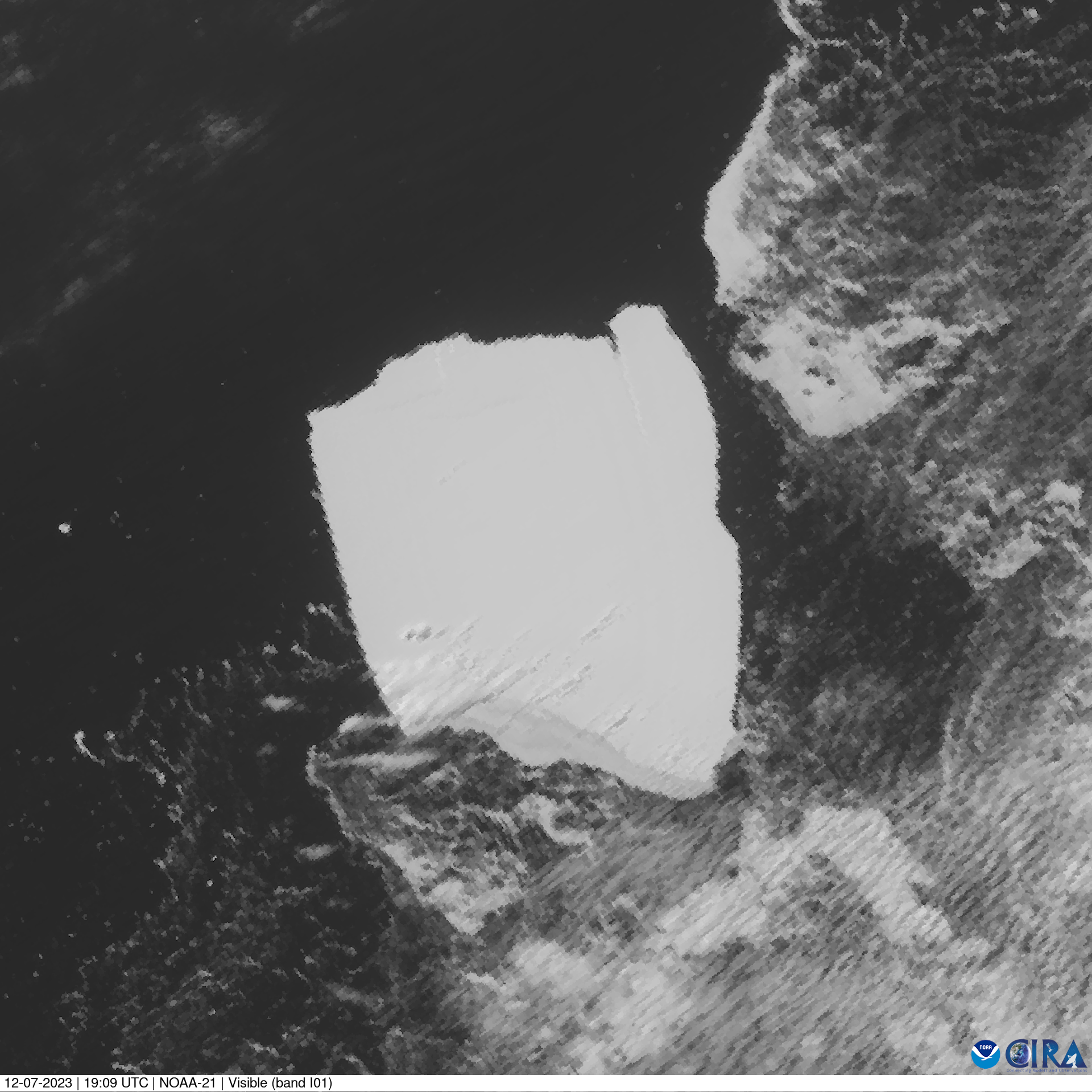
A23a is a large tabular iceberg in the southern Atlantic Ocean. As of January 2025, its area was approximately 1,505 sq. mi (3,900 sq. km), which made it the largest iceberg in the world at the time. This made it roughly the same size as the state of Rhode Island.
A23a originally calved from the Filchner-Ronne Ice Shelf in 1986, but it quickly grounded in the Weddell Sea, where it was stuck for over 30 years. In 2020, the iceberg started slowly shifting before moving past the northern tip of the Antarctic Peninsula in November 2023.
On December 1, 2023, the polar research ship RRS Sir David Attenborough intercepted the iceberg off the tip of the Antarctic Peninsula, sampling the waters around the berg.
By April 2024 the iceberg had entered the Antarctic Circumpolar Current, but soon became trapped in a Taylor Column north of the South Orkney Islands, spinning in circles. Taylor Columns are huge rotating cylinders of water that are created by ocean waters moving over underwater terrain. It took until December 2024 for A23a to free itself from the column and drift further north through the Southern Ocean.
The British Antarctic Survey expects A23a to follow the Antarctic Circumpolar Current towards the island of South Georgia in the southern Atlantic Ocean. In the beginning of March 2025, the iceberg encountered shallower waters off the island, and ran aground about 30 miles (50 km) from the shore.
As of late May, the iceberg had shrunk by around 200 sq. mi (520 sq. km) since it became stuck in March. In early June, A23a was freed from the ocean floor, and it began to move eastward while still shredding pieces, following a strong current jet known as the Southern Antarctic Circumpolar Current Front (SACCF) around the island. Since entering the SACCF, the iceberg has been rapidly disintegrating.
At the start of 2025, A23a was roughly the size of Rhode Island with an area of 1,418 sq. mi (3,672 sq. km) and it weighed nearly 1.1 trillion tons (1 trillion metric tons). But by early September, the berg had shrunk down to about one-fifth of its size, measuring about 656 sq. mi (1,700 sq. km), which is just about the size of Greater London.
Over the austral summer, A23a continued to melt and break apart north of South Georgia Island in the Southern Atlantic Ocean. Around the start of 2026, the surface of the iceberg contained large pools of meltwater, helping the berg melt from above. On March 20, 2026, the U.S. National Ice Center measured the iceberg at a mere 54 sq. mi (141 sq. km), noting that the berg was becoming too small to track from that point forward.

Satellite imagery of this event:
Hover over the boxes to play. Click the images to view enlarged